“There is no limit to beauty, no saturation point in design, no end to the material.” –Salvatore Ferragamo
26 June 2019
One key brand element that every fashion house has is a logo. Logos create a common connection between consumer and brand, and make merchandise easily identifiable. What if as a designer, we thought deeper into our products other than aesthetic? One brand element that maybe is not the most recognizable, but definitely increasingly important over years to come in fashion, is sustainability.
I was incredibly fortunate enough to visit Museo Salvatore Ferragamo as my first field visit. Upon walking in the museum, I noticed how different walking down steps to the reception desk was in comparison to other museum visits in the U.S. have been for me before. As I made my way to the desk beside my professor and classmates, I could not help but keep my eyes less pointed up, but down onto the floor. The floor had a different, pliable, fabric-like material composition I assumed to be of leather. But, you all know what happens when you assume, right?
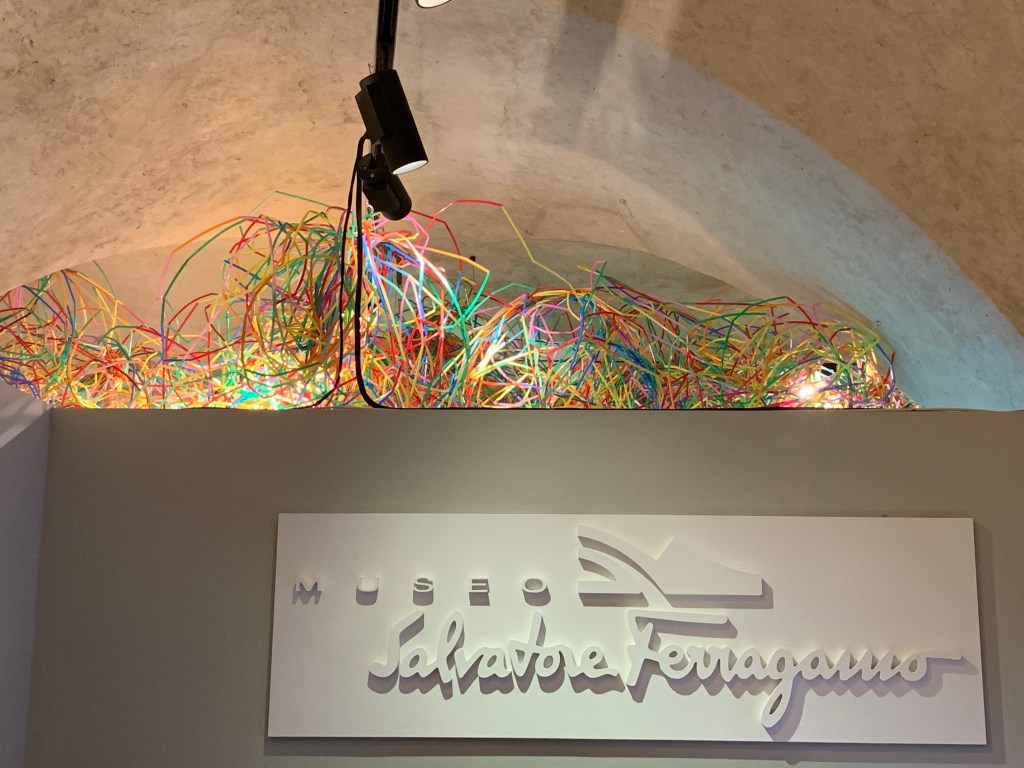
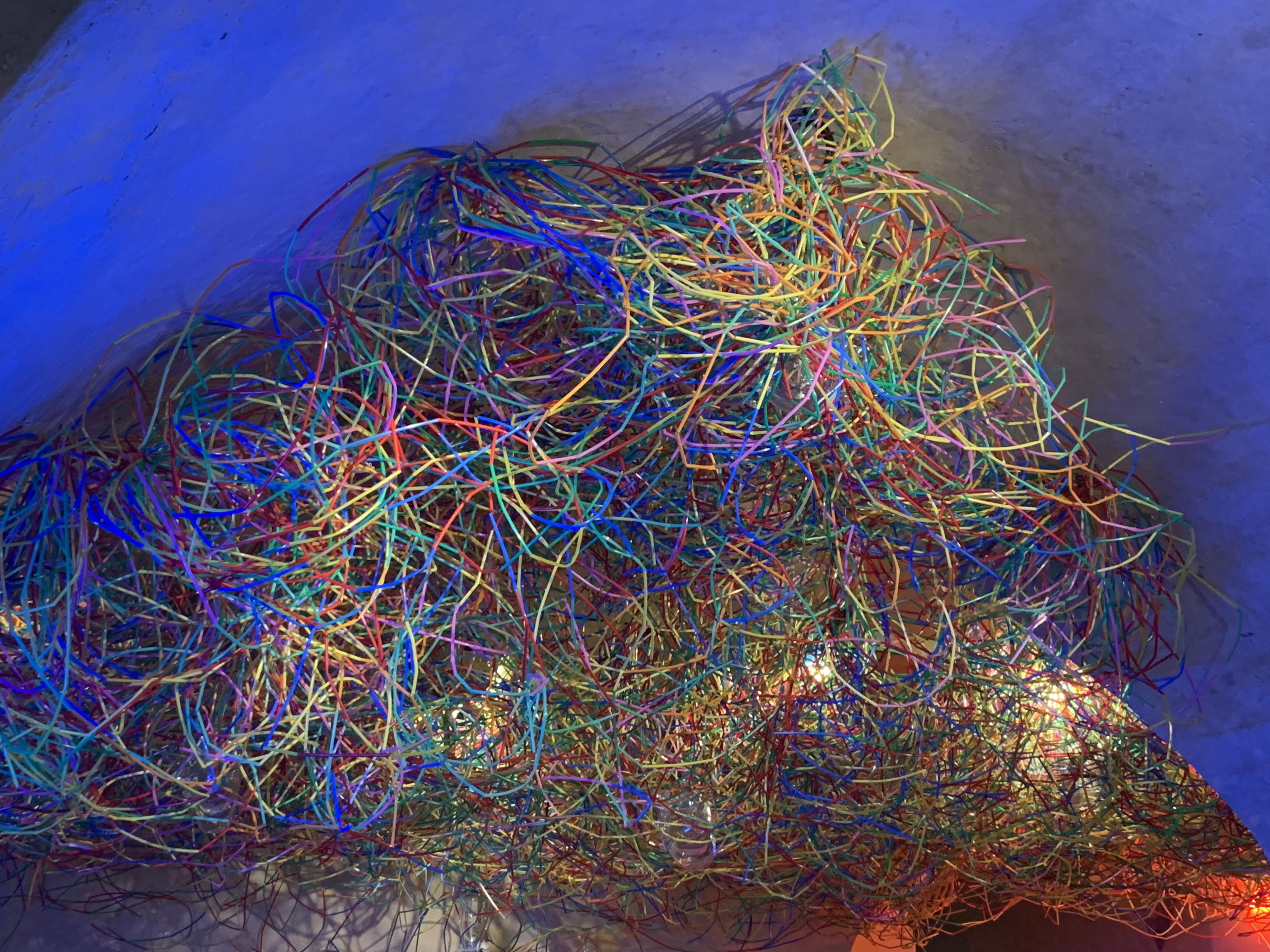
We were assigned a tour guide, who I foolishly forget the name of, and she began to speak with us students and guide us through the museum. Looking up at the ceiling in the beginning, thousands of plastic straws hung from up above, with glass sculptures of what I perceived as fish. This brought me to my attention of the current ocean cleanup taking place that involves removal of plastic and other non-biodegradable materials from the ocean. The next exhibit that placed a memory in my mind was the archival room. This room featured archival books, prototype models of shoes and heels from Salvatore Ferragamo. Some of his original shoes were made of fish scales. He used this material as living in Florence during the War, he did not have such access to leathers and modern technology of newer fabrics.
As we continued, another part of the museum that captured my eye was the use of a new, innovative way of dyeing apparel. The GRAPHI-TEE technology allows garments to be dyed via a powder method using graphite powder. I completed a researched presentation on sustainability of fashion brands. After the industrial revolution, there are many present effects of modern day fashion brands that cause pollution and toxins to be released into the world’s environment. One of these acts includes the dyeing processes that many fast fashion chains cause, as majority of toxic dyes to remain in water. This method described at the museum makes me wonder about the future of sustainability in the fashion world.
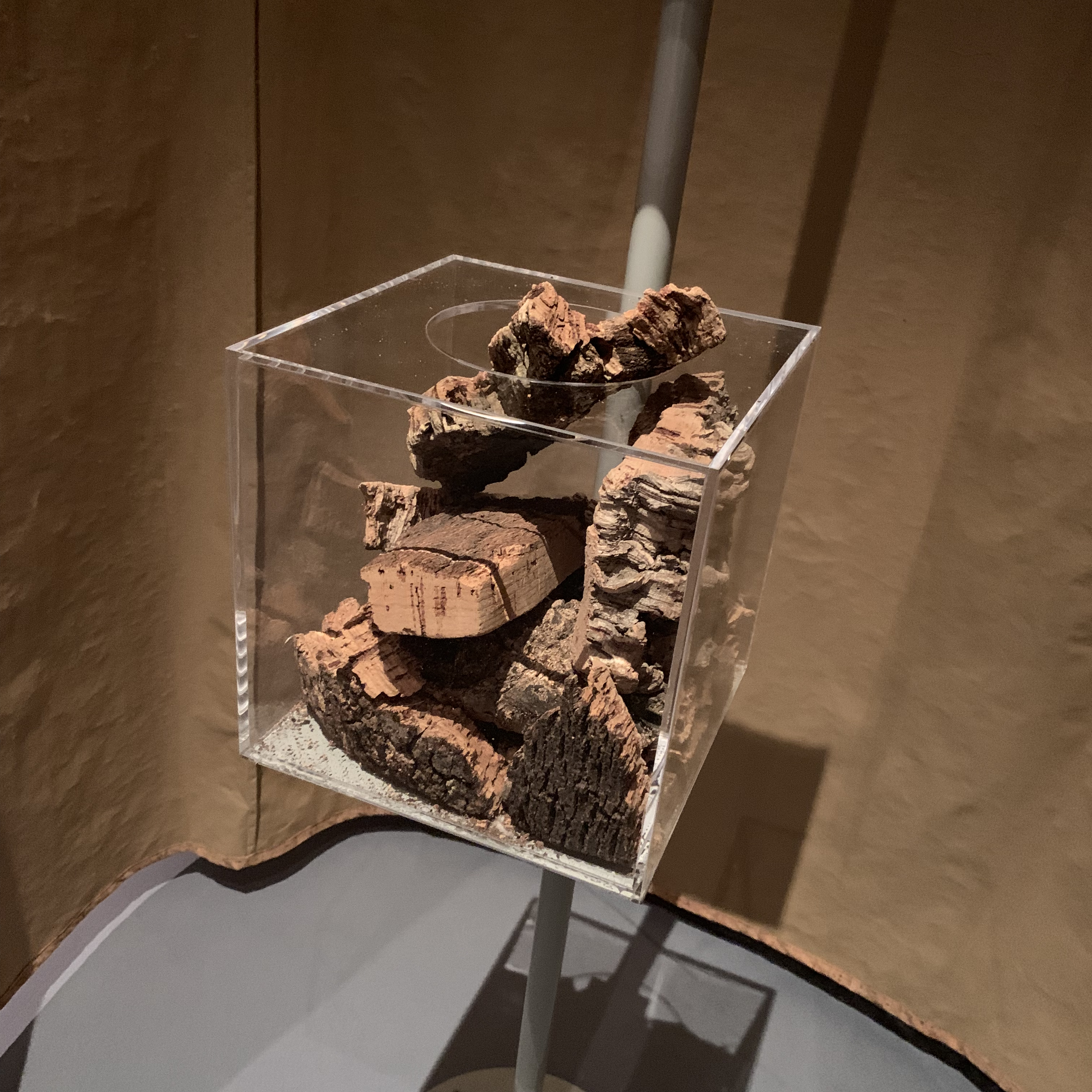
Finally, the last exhibit full of different displays featured interesting materials that guests were allowed to handle. One that the tour guide handed to me was cork. I found it to be light, and woody. The fun fact is that cork is made from wood, and the display along with other fabrics and materials in the room, had a tall sheet of the finished cork from floor to ceiling that wrapped around an acrylic box on an eye level stand filled with the raw pieces.
Overall, I truly enjoyed the Museo Salvatore Ferragamo visit. To my surprise, many of Ferragamo’s, and other designers’ works did not grasp my attention as well as the processes and sustainability of using natural resources for fashion materials did. Towards the end of the tour, our tour guide mentioned that the floor I admired from the beginning was composed of recycled material. As the U.S. houses a plethora of fast fashion chains such as H&M, Forever 21, Zara, Rainbow to name a few, it makes me wonder the difference behind the scenes with American fashion as opposed to processes of European apparel. One day I will be back here to see updates on sustainability in correlation with fashion, especially if the U.S. does not seem to catch up to these ideas!
 Alec Schlotfeldt's Study Abroad Blog: Fashion in Italy